Crochet Coasters: A Guide to Plain and Animal Coaster Patterns
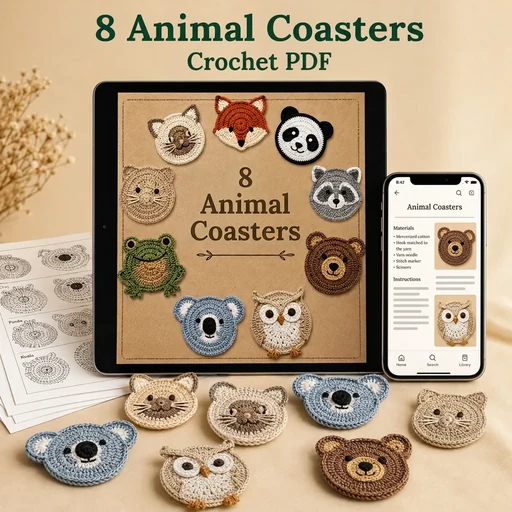
A crochet coaster is a flat circle of cotton, usually 10 to 12 cm across, that can be plain, patterned or shaped like an animal. A beginner can finish one in an evening. This guide covers the yarn and hook, how to keep a circle flat, how to turn a circle into an animal, how to make a set for a gift, and what to know if you want to sell them.
Choose cotton
Coasters sit under wet cups, so the yarn matters more than for a toy.
| Yarn | Absorbs water | Holds shape | Washes well | Good for |
|---|---|---|---|---|
| Cotton | Yes | Yes | Yes, hand wash cool | Coasters that get used |
| Cotton-acrylic blend | Some | Yes | Machine, cool, in a bag | Everyday sets |
| Acrylic | No | Fair | Machine, cool | Decorative coasters |
| Wool | Some | Fair | Can felt | Not a first choice |
For a first set, a smooth DK cotton in a light colour shows the stitches, which makes counting easy. Use a hook that gives dense fabric: the same small hook as for a toy, about 2.5 mm for DK and 3.0 to 3.5 mm for worsted. Dense fabric keeps a coaster firm and flat. The guide to yarn for amigurumi explains the same fibre trade-offs in more detail.
A flat circle, round by round
Every round coaster starts as a flat circle. The rule is simple: increase by six stitches per round.
| Round | Stitches |
|---|---|
| R1 | 6 sc in a magic ring |
| R2 | 12 |
| R3 | 18 |
| R4 | 24 |
| R5 | 30 |
| R6 | 36 |
That is a circle of about 10 to 12 cm in DK with a small hook, depending on your tension. Stop when the circle covers the base of a mug. Fasten off and weave in the end.
Fixing a circle that will not lie flat
- It ripples like a frill: too many increases. Pull back the round and recount your repeats.
- It curls into a bowl too early: too few increases. Count; you may have missed an increase in a repeat.
- It turns into a hexagon: the increases are stacked in the same columns. Stagger them by splitting the plain stitches around each increase.
- It feels hard as wood: the hook is too small. Go up half a size.
From circle to animal coaster
Animal coasters add a few features to the flat circle: ears, a muzzle, a tail and a face. Common ideas include a bear, a cat, a fox, a frog, a chick, a bunny, a pig and a lamb.
- Make the base circle in the animal's main colour.
- Work the ears as small flat pieces, 3 rounds, and sew them on at the edge.
- Add a muzzle in a contrast colour, worked as a smaller circle and sewn on.
- Embroider the nose and eyes. Do not use safety eyes on a coaster; they will catch on a cup and are not suitable for young children.
- Weave in the ends and press the finished piece flat.
The library has 10 coaster patterns in its Home and decor folder, from a citrus slice and a sunflower to a vinyl record, a chicken, a boho circle and an easy plain coaster, plus a coaster holder to display a set. Dedicated animal coaster packs exist as a separate optional add-on offered at checkout. It is not part of the library itself.
Make a set
A matched set looks like a gift, not a leftover.
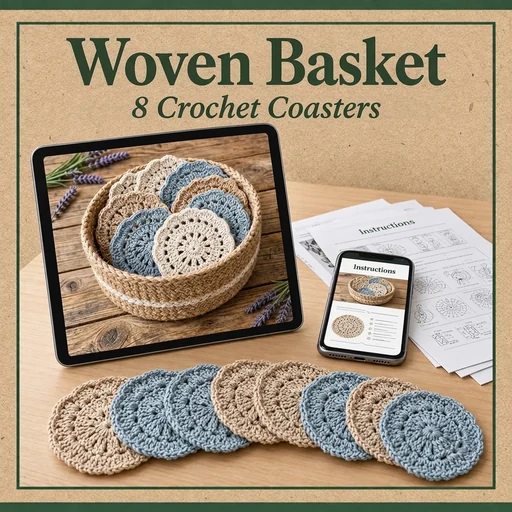
- Four or six pieces. Fewer than four looks incomplete; more than six is a lot of washing.
- Two shared colours across the set, with one accent that changes per coaster.
- One shape, many faces, or many shapes in one palette.
- The same cotton and the same hook so all the sizes match.
- A holder. A small basket or a coaster holder turns four circles into a present.
The Gift Animal Planner has set recipes for toys that apply to coasters too. For ideas, see crochet gift ideas.
Plan the yarn
Coasters are small, so a scrap often covers one. A useful trick is to weigh the ball, divide by the grams a single coaster uses and see how many you can make. The Yarn, Hook & Leftover Calculator suggests keeping a ten percent margin so you do not run out on the last piece. Keep a contrast scrap for details, which is usually under 10 grams in DK for muzzles, ears and tails.
Care
- Hand wash cotton cool, squeeze in a towel and dry flat.
- Acrylic coasters can be machine washed cool in a pillowcase and reshaped to dry.
- Cotton can shrink a little in a hot wash, so wash cool.
- If you give a set, add a tag with the fibre and a care line.
If you want to sell them
Coasters are a common first item for a market table because they are small, quick and giftable. A few honest points:
- Nobody can promise sales. Most first markets sell a handful of small items.
- Work out your cost. Yarn grams times price per gram, plus time, before you price.
- Sell sets, not singles.
- Do not sell the pattern files, and avoid copying characters that belong to someone else.
- Check regional rules for selling handmade goods.
See how to sell crochet items and what the library allows for the rights in 1,947 Amigurumi Patterns.
Small projects to follow
When you have a set of coasters done, mini projects like crochet keychains use the same small hook and a few grams of yarn.
Go deeper
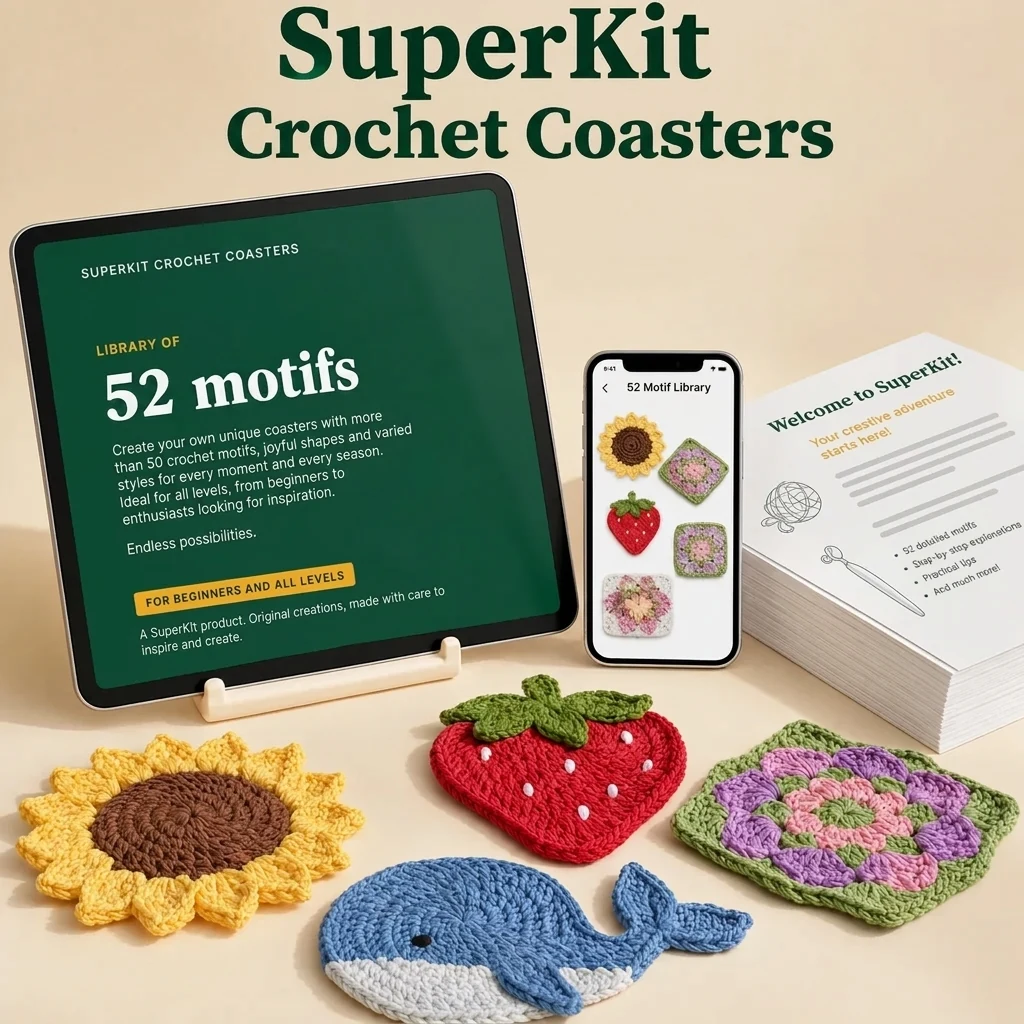
1,947 Amigurumi Patterns includes 10 coaster patterns in its Home and decor folder, plus the Yarn, Hook & Leftover Calculator, the Gift Animal Planner, and the Kitchen Table Stall Kit, which explains costing a handmade piece and the rights that come with the library.