Selling Crochet Amigurumi: What You May Sell and How to Start
You can often sell finished crochet toys made from a pattern you bought, but you cannot sell the pattern itself, and the exact rules come from the seller's terms. Nobody can promise an income from crochet, so the sensible path is to learn what you may sell, work out your costs, and test a small table before you plan on more. This guide covers the rights, the costing, the choices of where to sell and the safety points, using what 1,947 Amigurumi Patterns includes as the worked example.
What the library's terms say
The Kitchen Table Stall Kit in the collection puts the rights on one page. In short:
| You may | You may not |
|---|---|
| Sell the finished handmade toy you crocheted from a pattern in the library, at a market, fair, shop or online | Resell, share or upload the pattern files or the bonus PDFs |
| Take custom orders and change colours, sizes and details | Sell the patterns, translate them for sale or print them as booklets |
| Use your own photos of your finished toys | Sell characters that belong to somebody else, even in new colours |
| Give toys as gifts or sell them for charity | Use the pattern pages or their images to advertise your items |
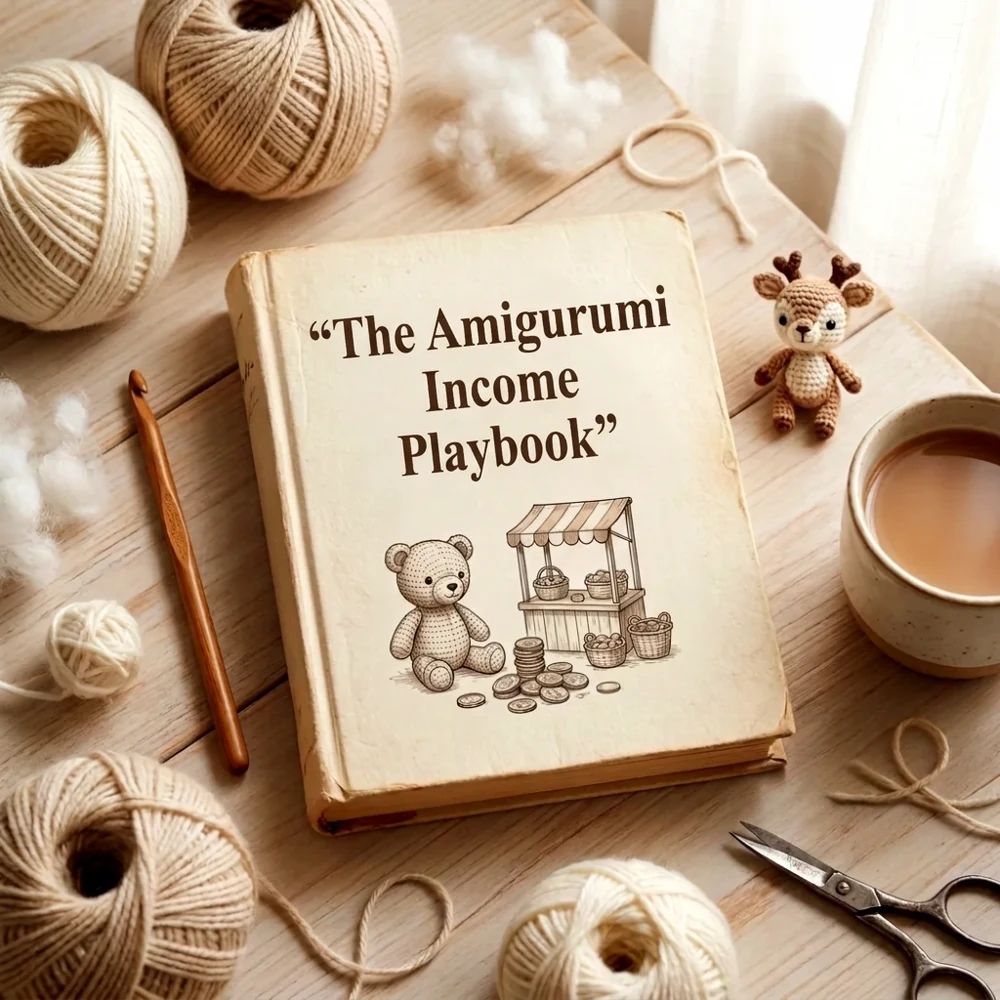
The Amigurumi Income Playbook includes a printable certificate of commercial rights that says the same, to keep with your market kit. The rule of thumb is: sell the toy, keep the files.
If you use patterns from another source, read that seller's terms too. They differ. See what to check before buying a PDF library.
No promises about income
Be wary of anyone who promises to make you a living from crochet. Sales depend on your skill, your price, your table, your location and luck. Most first markets sell a few small toys, and that is a good day. A realistic goal for the first month is that each toy you sell pays for its own yarn and the next skein, and that you never undersell an evening of work.
Cost a plush before you price it
You need six numbers for each toy.
- Main yarn: grams used times the price per gram of the ball.
- Contrast yarn: a few grams times the price per gram.
- Fiberfill: grams times the price per gram of the bag.
- Eyes and notions: safety eyes, thread, tags.
- Packaging: a label and a bag or box.
- Your time: hours times an hourly rate you would accept.
Add them up. That is your cost. Then compare it with what similar handmade pieces sell for where you live and adjust to your currency. The Stall Kit works the cost through for a first bear step by step, and the Income Playbook has a cost-per-plush worksheet, an hourly rate calculator and a price ladder.
The Stall Kit includes a section on pair and set pricing, because a matched pair at one price can be simpler to sell than two singles.
What tends to work for a first table
- Small, giftable items: palm-sized animals, keychains and coasters. See crochet keychain patterns and crochet animal coasters.
- Seasonal minis: Christmas, Easter and Valentine's Day pieces sell near the date, so plan the dates.
- Sets: a mama and baby bear, or four coasters in one palette.
- One tidy table: a cloth, a price card, a label on every toy and a sign.
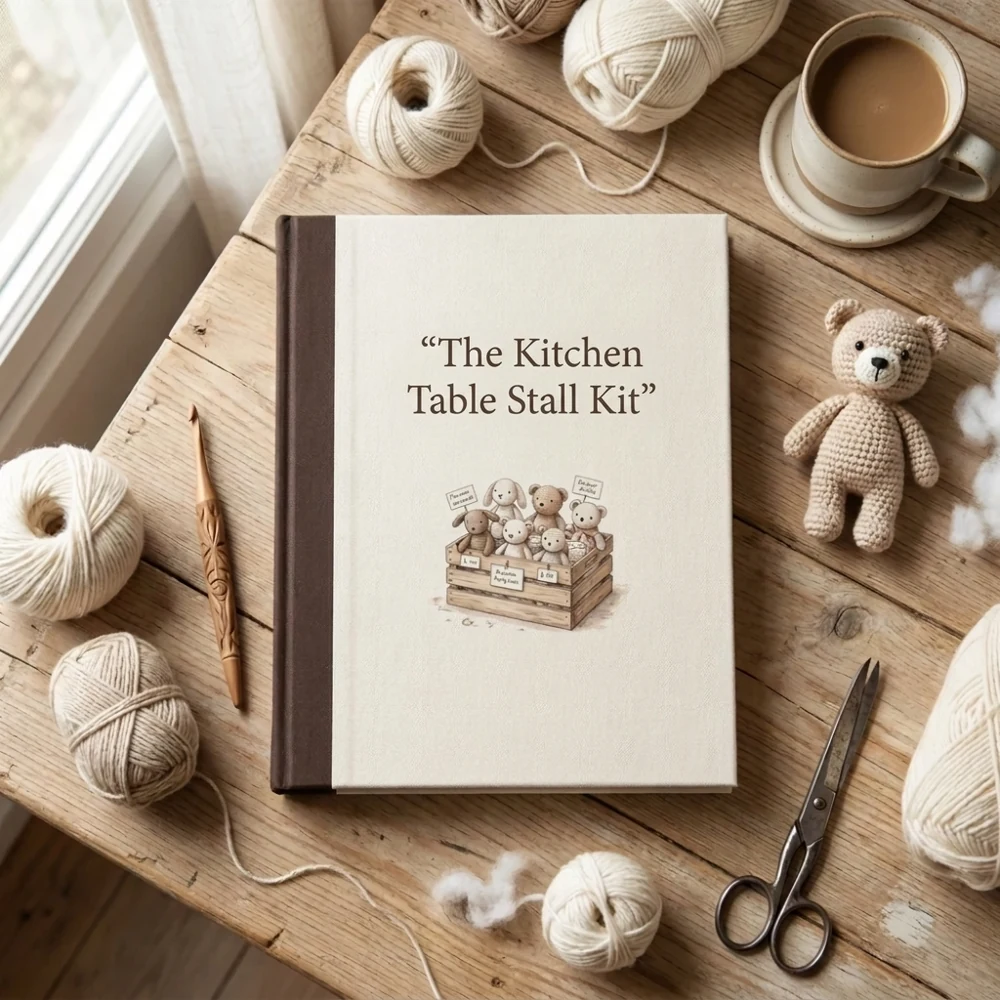
The Stall Kit covers table setup, photography in window light, labels, your first ten online listings, your first market Saturday, five places to sell compared, shipping a plush, batching like a small shop and what gets sellers banned. It also has a sales log and a monthly tally.
Where to sell
| Place | Good for | Watch for |
|---|---|---|
| Friends, family and neighbours | A first sale and honest feedback | Pricing too low |
| School fairs and church halls | Low stakes, a small table | Weather, timing |
| Local markets | Seeing buyers face to face | Table fees, one day only |
| Local shops and consignment | Steady shelf space | Shop commission |
| Online marketplaces | Reach beyond your town | Fees, photos, shipping |
Safety and rules
- Toy safety. Toys for young children may be subject to testing and labelling rules. In the United States, the Consumer Product Safety Commission (CPSC) publishes guidance for makers of children's products. Look up the rules where you live before selling toys for babies or children.
- Small parts. Embroider the face on anything for a child under 3. Do not add buttons, beads or bells.
- Care labels. Add a fibre and care line to every tag, such as hand wash cool and dry flat for cotton.
- Taxes and permits. Local rules for selling still apply, such as tax and a market permit.
- Characters. Avoid designs of film, show or game characters. They belong to someone else, and selling toys of them can get a listing removed.
A realistic first step
- Make five toys of one design you can finish well.
- Cost each one and write the numbers down.
- Take them to a small fair or sell to people you know.
- Note which sold, at what price, and how long they took.
- Decide, with your own numbers, whether to make more.
The gift ideas guide lists the same small animals as presents, which is a good test of what people like. The comparison with single marketplace patterns also explains how terms differ between sources.
Go deeper
1,947 Amigurumi Patterns includes the Kitchen Table Stall Kit and The Amigurumi Income Playbook, with six chapters on a first sale, markets, selling online, making it steady, the numbers and your commercial rights, plus printable price cards, a made-to-order form, a monthly sales tracker and the certificate of rights. They are guides, not guarantees: the results depend on you.